Desert Vista Luxury Homes: Architectural Elegance, Innovation & Real-Life Examples
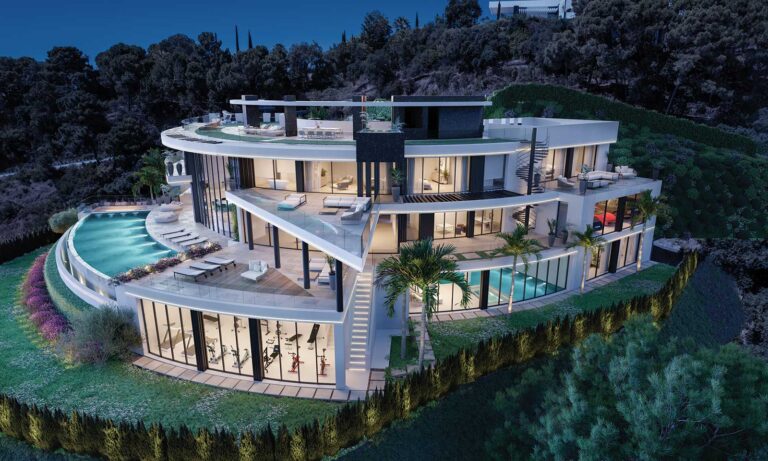
Desert Vista luxury homes are residences designed to harmonize with arid landscapes, leveraging natural light, sustainable materials, and cutting-edge architecture. These homes often feature expansive windows, seamless indoor–outdoor transitions, and high-end finishes that reflect both luxury and regional identity.
In this article, we dive deeply into the world of Desert Vista luxury homes. We’ll explore architectural principles, materials, site strategies, technology benefits, real-world examples, use cases, and more. By the end, you’ll have a full picture of what makes these homes distinct and aspirational.
Architectural Principles & Design Strategies
Contextual Design and Landscape Integration
One hallmark of Desert Vista luxury homes is their sensitivity to context rather than imposing rigid forms; they adapt to desert topography. Architects often orient homes to capture views of desert mountains, valleys, or rock formations. Landscaping uses native plants (cacti, succulents, drought-tolerant shrubs) to blend structure and environment. This softens edges and ensures harmony between built and natural worlds.
Another strategy is to recess portions of the house into the terrain or use retaining walls to control massing. Such designs reduce heat gain, mitigate wind effects, and maintain a lower visual profile. The goal is a home that feels planted in its environment, not atop it.
Material Palette & Sustainability
Desert Vista luxury homes typically employ materials both beautiful and resilient. Stucco, natural stone, weathering steel, and concrete are common, often paired with large expanses of glass. The choice reflects considerations of thermal mass, durability, and minimal maintenance.
Sustainable design is central: thick insulation, thermal breaks, high-performance glazing, and passive solar shading systems are integral. Roof overhangs, sunshades, and recessed windows help reduce direct sun exposure. Many designs include rainwater collection, greywater reuse, and passive cooling strategies (cross-ventilation, stack effect shafts).
Interior Layout, Finishes, and Spatial Experience
Open Floor Plans & Flow
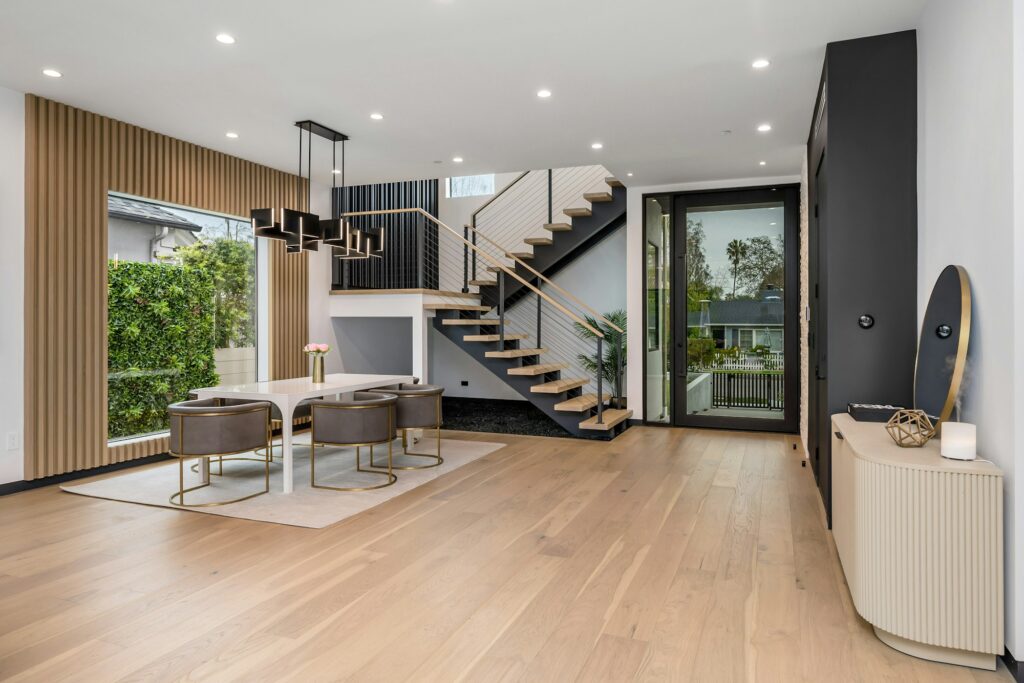
Inside Desert Vista luxury homes, the spatial arrangement often prioritizes openness and continuity. Living areas, dining, and kitchens usually flow into one another, minimizing barriers. Large sliding or folding glass walls dissolve the boundary between indoor and outdoor spaces, extending living into courtyards, patios, or desert terraces.
Zones are thoughtfully organized: service areas, private bedrooms, and utility spaces are tucked away so they don’t interrupt primary living vistas. This layout gives the core living areas maximum exposure to views and daylight.
Premium Finishes & Materials
In high-end examples, finishes are chosen for both luxury and endurance. Natural stone floors, engineered wood, polished concrete, or large-format porcelain tiles are prevalent. Cabinetry often uses veneered wood or lacquered surfaces, with minimal hardware for a sleek, seamless appearance.
Lighting is integral: recessed lighting, cove lighting, and LED strips accentuate form and volume. Fixtures are curated carefully, sculptural pendants, concealed uplighting, and ambient wall washers create layered light. Attention to detail, flush thresholds, hidden transitions, and continuous flooring ensure a refined spatial experience.
Technology & Innovation in Desert Vista Luxury Homes
Smart Home Systems & Automation
Modern Desert Vista homes incorporate automation: climate controls, lighting scenes, motorized shades, home security, and irrigation are often unified under a central smart-home platform. For instance, sensors may adjust indoor temperature or shade position based on time of day, sun angle, or occupancy.
This integration enhances comfort, efficiency, and intuitive living. Homeowners can control everything from their smartphone or voice assistant. Over time, data patterns allow the system to optimize performance, adapting to seasonal and daily patterns.
Energy Efficiency, Renewable Systems & Monitoring
Because desert climates demand careful energy management, many luxury homes in this category integrate renewable technologies:
-
Photovoltaic solar panels to offset the load
-
Battery storage for energy resilience
-
High-efficiency HVAC systems with variable-speed compressors
-
Heat recovery ventilation for air quality without losing efficiency
-
Monitoring dashboards that track consumption, generation, and alerts
These systems allow homeowners to monitor energy in real time, identify inefficiencies, and reduce utility costs while contributing to sustainability goals.
Real-World Examples & Case Studies
Below are three compelling real-world Desert Vista luxury homes (or projects) that illustrate the principles discussed above.
Desert Vista Custom Home by AFT Construction
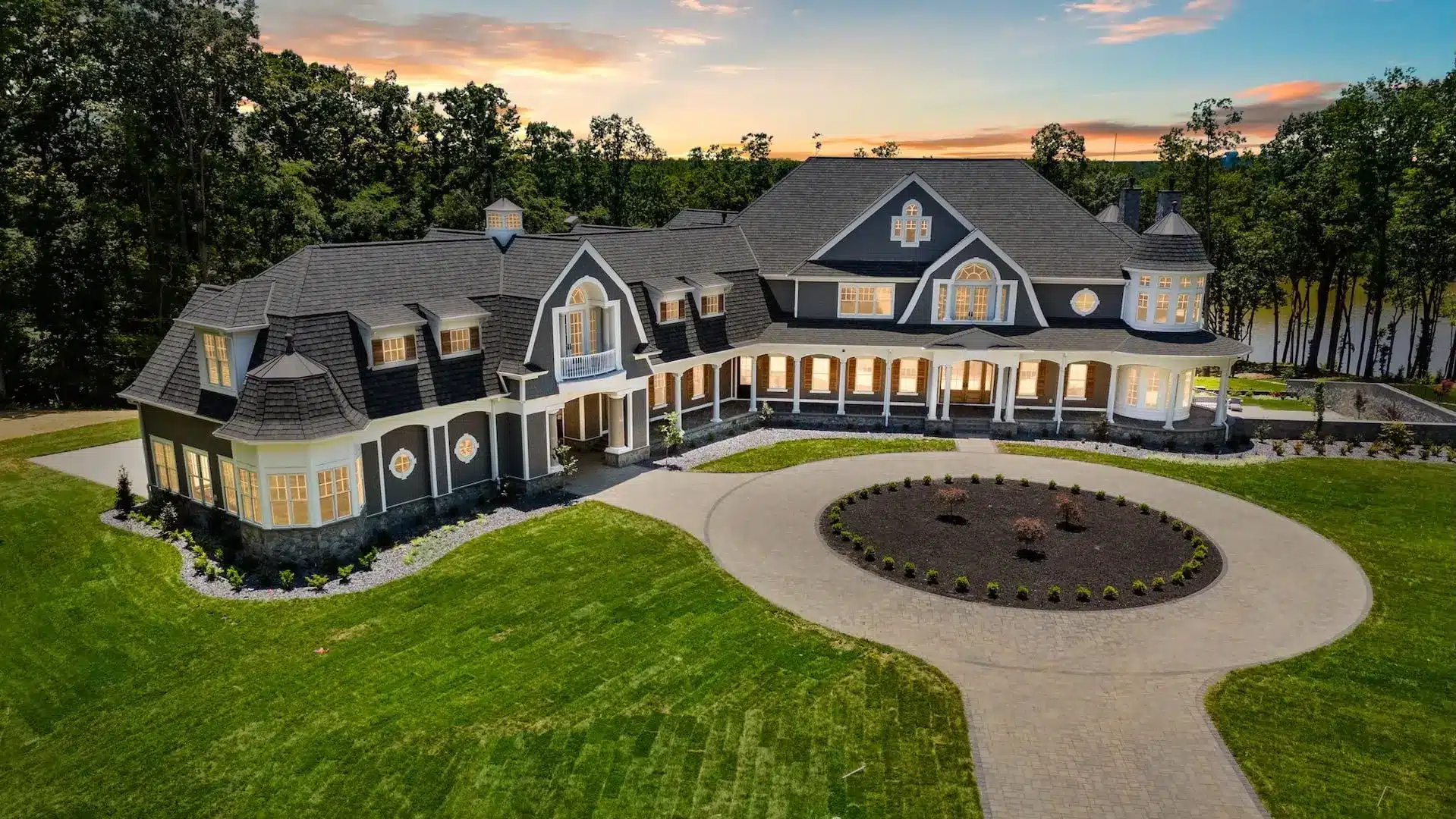
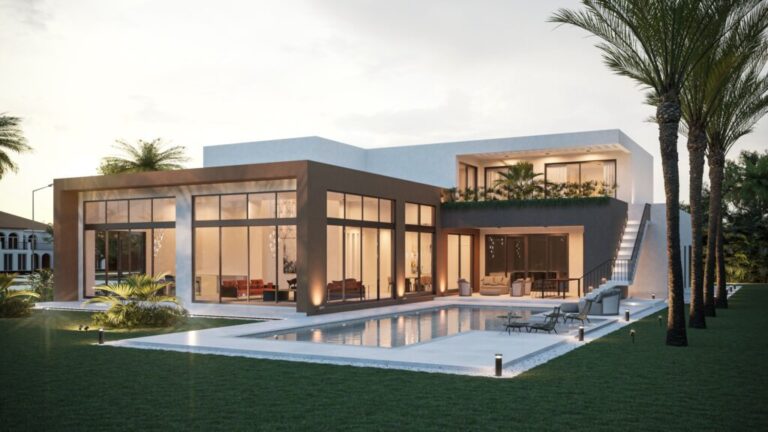
AFT Construction’s “Desert Vista” portfolio shows a home with expansive glass facades, clean horizontal lines, and strong indoor-outdoor relationships. The design merges polished indoor spaces with desert patios and terraces. Residents benefit from passive shading, natural ventilation, and context-aware geometry. The home’s twilight images reveal dramatic lighting that highlights massing and texture, a hallmark of luxury desert architecture.
This example is relevant because it demonstrates how premium materials, contextual siting, and lighting can elevate a Desert Vista home into a piece of art, not simply a shelter.
Desert Vista in Scottsdale Vacation Homes Collection
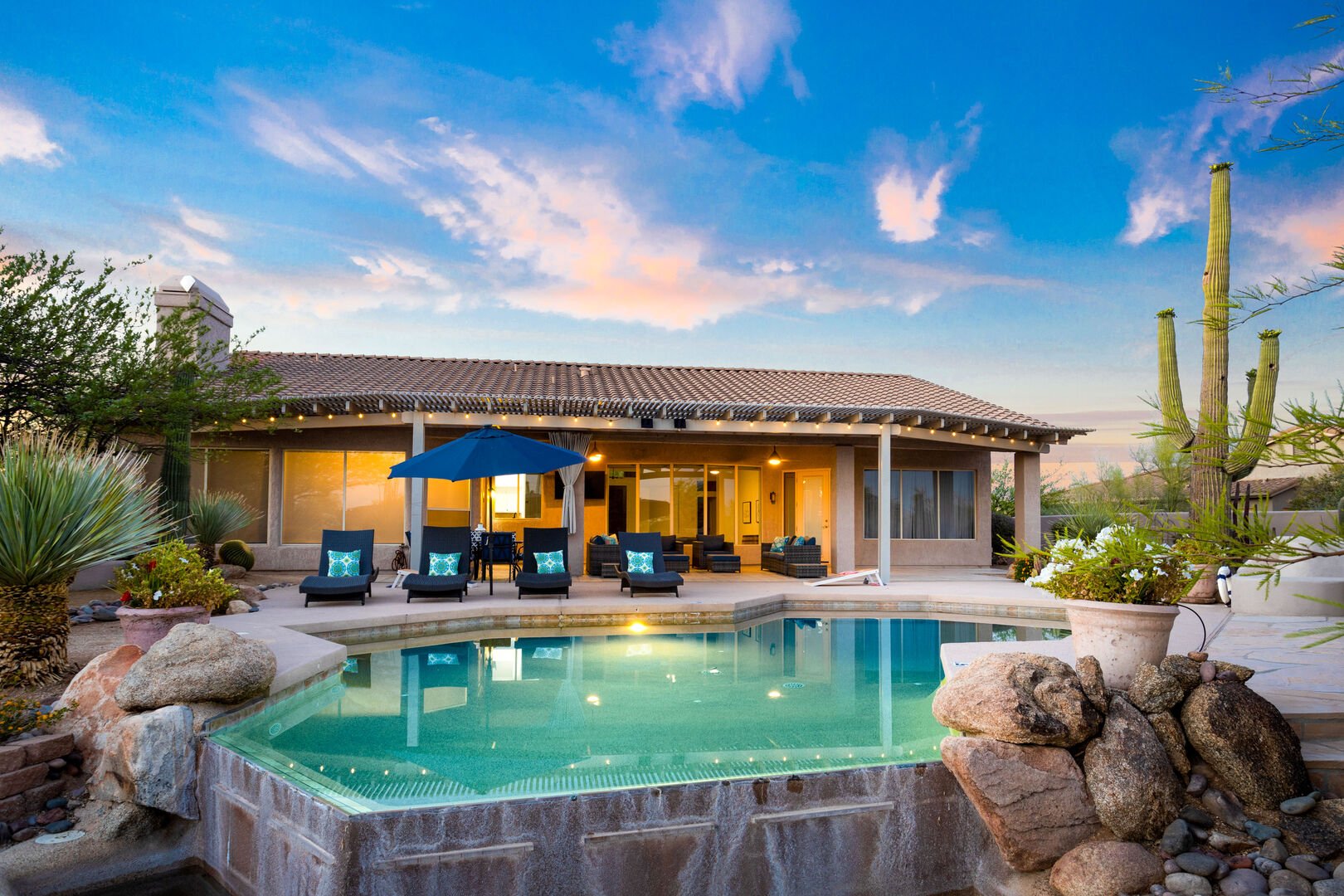
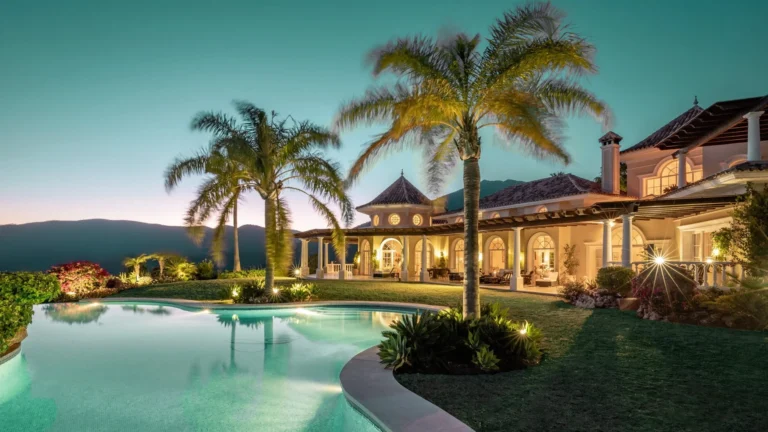
Within a luxury vacation rental collection in Scottsdale, Desert Vista homes emphasize localized desert aesthetics: adobe or stucco finishes, pools integrated into courtyards, desert planting palettes, and interiors that echo the regional palette. The rentals often feature open spaces with indoor-outdoor transitions, offering a real-world test of how design expectations meet user experience.
As an example, analyzing how these homes are staged and presented reveals practical lessons in creating visual appeal and functional luxury in desert settings.
Custom Desert Vista Projects in Arizona’s High-End Market
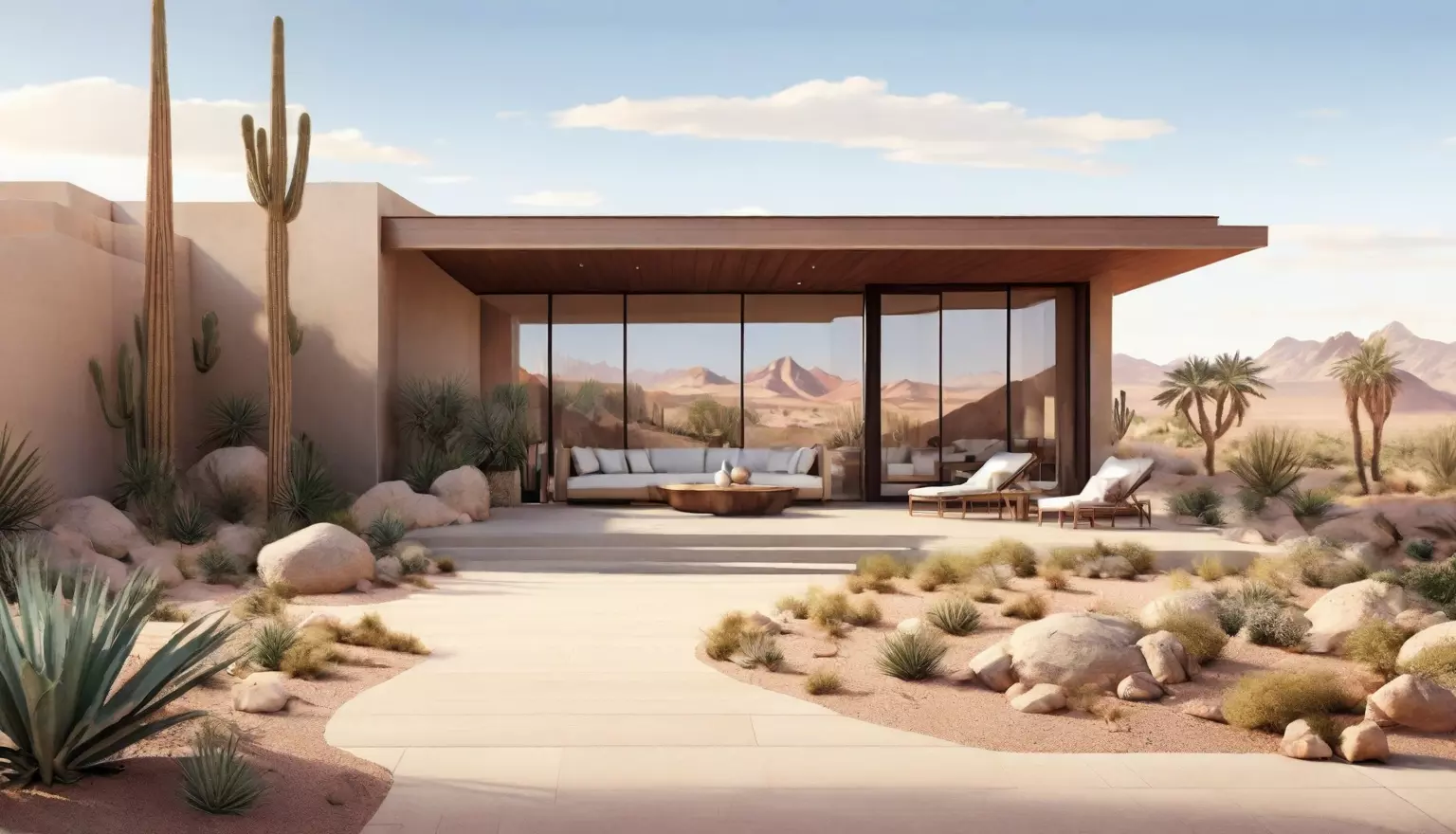
In the broader Arizona luxury home market, many custom Desert Vista homes emphasize dramatic rooflines, cantilevered overhangs, thermal buffering walls, and sculptural elements. These align with sustainability principles and aesthetic clarity. The use of subtle color palettes (earth tones, sand, taupe) helps the buildings recede visually into their surroundings.
By reviewing project portfolios of such homes, one can better understand emerging trends: integrated art installations, desert lighting plans, and smart shading systems. These help define the next generation of Desert Vista luxury living.
Benefits & Practical Advantages
Elevated Aesthetic + Longevity
By drawing from the environment — sun, wind, terrain — Desert Vista luxury homes often age gracefully. The choice of durable, low-maintenance materials ensures that the aesthetic remains compelling over decades.
Energy Efficiency & Lower Operating Costs
With integrated solar, smart controls, insulation strategies, and passive design, these homes often use significantly less energy than standard homes in similar climates. Over time, this saves money and enhances environmental performance.
Enhanced Comfort & Resilience
Automation systems adapt to heat loads, shade conditions, or occupancy. Homes remain comfortable even under extreme climate stress. Backup systems (batteries, microgrids) offer resilience during outages.
Increased Market Value & Differentiation
Luxury homes that perform well mechanically and aesthetically command premium prices. The uniqueness of design and integration with the landscape becomes a selling points that distinguish them in high-end real estate markets.
Use Cases & Problem-Solving Scenarios
Use Case 1: Harsh Desert Climate Adaptation
In extreme deserts, standard homes struggle with heat, sun glare, high cooling loads, and dust. Desert Vista homes provide solutions via shading, orientation, insulation, and smart systems addressing occupant comfort and utility burden.
Use Case 2: Vacation Homes in Desert Destinations
Many buyers seek luxury second homes in desert destinations (Arizona, Nevada, the Middle East). Desert Vista design principles ensure these homes feel fresh year-round, remain low-maintenance, and deliver an immersive experience even for infrequent occupancy.
Use Case 3: Aging-in-Place in Challenging Climates
For homeowners who remain long-term, Desert Vista homes can be designed for accessibility, passive comfort, and efficient systems, reducing the physical strain of living in harsh environments over time.
Problem Solved: Overheating, Energy Waste, Visual Disjunction
Poorly designed desert homes often suffer from overheating, glare, and high energy costs. They also look visually discordant in their context. Desert Vista luxury homes resolve these issues with coherent design, context awareness, and technology.
Conclusion
Desert Vista luxury homes represent a convergence of architectural refinement, environmental intelligence, and lifestyle ambition. These homes do more than stand in the desert — they converse with it, drawing strengths from climate, views, and materiality. Whether in Scottsdale, Phoenix, or exotic desert regions, the principles of site responsiveness, premium finishes, technology integration, and sustainable performance define the next generation of luxury desert living.
If you frame your SEO around “Desert Vista luxury homes, architecture & features,” your article can resonate with designers, buyers, and enthusiasts alike—offering depth and authority rather than superficial gloss.
FAQ
1. What climate design strategies are vital for Desert Vista luxury homes?
Key strategies include deep overhangs, recessed glazing, cross-ventilation, thermal mass (stone/concrete walls), high-performance windows, and desert-adaptive landscaping.
2. How do smart home systems enhance Desert Vista homes?
Integrated systems monitor the environment, control HVAC, lighting, shades, and energy flows. They optimize comfort and efficiency by adapting to usage patterns, weather conditions, and occupant preferences.
3. Why do Desert Vista luxury homes often use earthy material palettes?
Earthy tones and natural materials help the structure blend with the landscape, reduce visual contrast, and evoke a sense of belonging to the terrain, creating a timeless aesthetic rooted in context.