Luxury Real Estate Investment: A Complete Guide to Profitable High-End Property Strategies
Luxury real estate investment refers to the acquisition and management of premium properties designed to deliver both lifestyle benefits and strong financial returns. These assets typically include high-end homes, penthouses, villas, estates, and exclusive commercial developments situated in desirable global locations.
Unlike standard real estate, luxury properties are driven by prestige, architecture, design, and scarcity. They attract a unique audience, high-net-worth individuals (HNWIs) and institutional investors looking for diversification, stability, and long-term appreciation.
What Defines a Luxury Property in Investment Terms
Luxury in real estate goes beyond price; it’s about exclusivity, craftsmanship, and experience. These properties are often located in prime areas like Beverly Hills, London’s Knightsbridge, Monaco, or Dubai Marina, where demand consistently outpaces supply.
Investors look for five key elements when evaluating luxury real estate: location, architectural design, amenities, privacy, and appreciation potential. The combination of these factors drives both prestige and profit, making them a cornerstone of diversified investment portfolios.
The Evolution of Luxury Real Estate Investment
Historically, luxury real estate was dominated by private buyers and elite families. However, with globalization and digital platforms, the market has become more transparent and accessible. Investors can now explore international opportunities using virtual tours, AI-based valuation tools, and real-time data analytics.
Institutional investors and real estate funds have also entered the space, treating luxury assets as both tangible stores of value and profitable business ventures.
Real-World Examples of Luxury Real Estate Investments
1. One Hyde Park – London, UK

One Hyde Park is one of the most iconic luxury residential developments globally. Owned by the Candy brothers, it represents the pinnacle of urban luxury living with amenities like a private spa, a 24-hour concierge, and in-house security. Its apartments regularly break European price records, making it a textbook example of capital appreciation in luxury real estate.
2. The Palm Jumeirah Villas – Dubai, UAE

Dubai’s Palm Jumeirah represents a blend of innovation and luxury. Investors are drawn to its waterfront mansions, cutting-edge architecture, and high rental yields. Its global appeal has positioned it as a lucrative market for both local and foreign investors.
3. The Beverly Hills Estates – Los Angeles, USA

Home to Hollywood elites, Beverly Hills offers ultra-luxury estates with historical significance and architectural innovation. Properties here serve as both residences and investment vehicles due to the area’s cultural cachet and consistent global demand.
4. La Zagaleta – Marbella, Spain
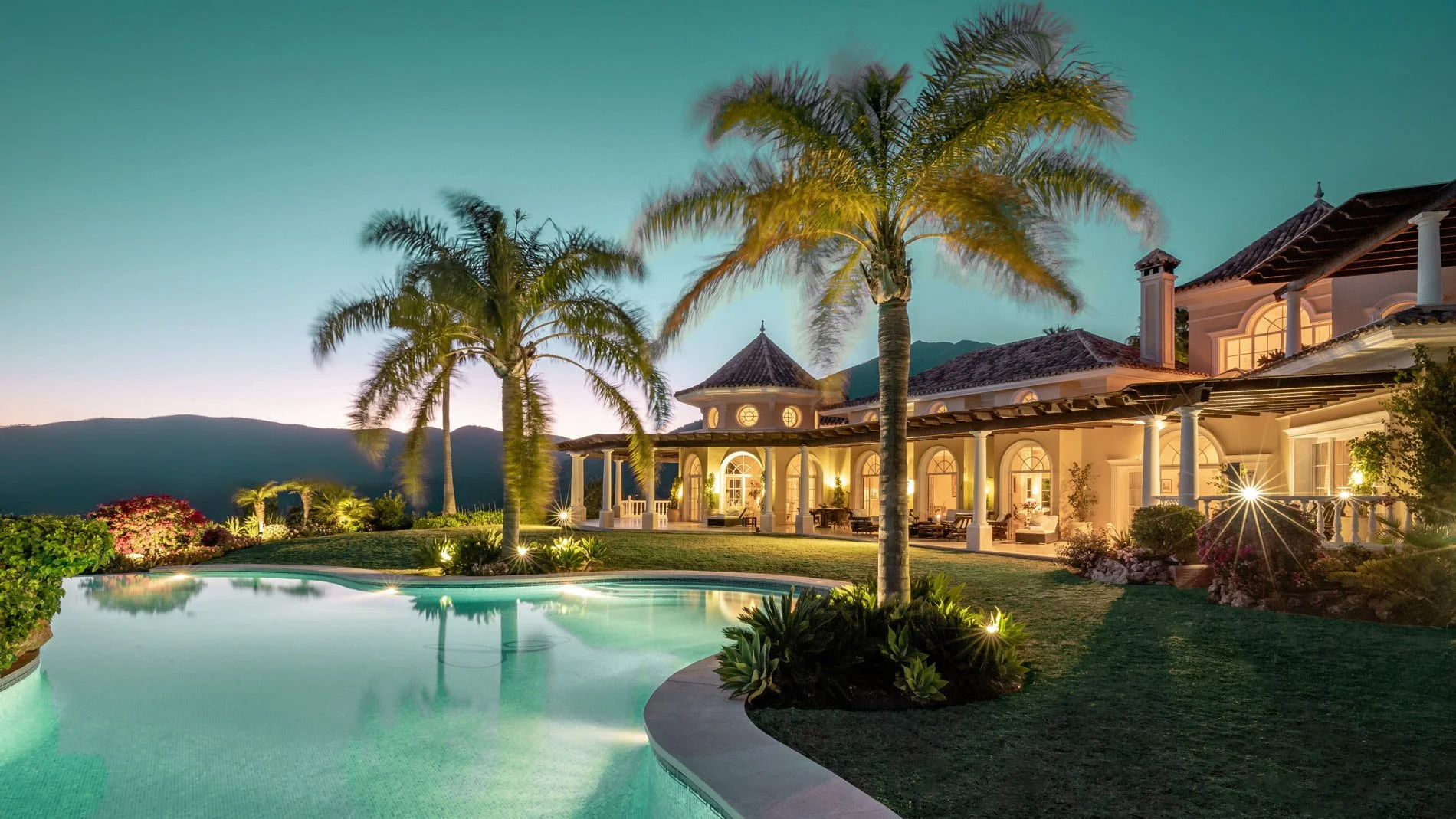
This gated community offers world-class golf courses, equestrian centers, and unparalleled privacy. It’s an example of how lifestyle-driven developments attract buyers seeking exclusivity and security.
5. The Peak – Hong Kong
The Peak remains Asia’s most prestigious address. With panoramic city and harbor views, limited land availability, and global recognition, The Peak demonstrates how scarcity fuels long-term property value.
How Technology Is Transforming Luxury Real Estate Investment
Modern investors rely heavily on digital tools to identify, evaluate, and manage luxury properties. Technologies such as AI-based predictive analytics, blockchain for transparent transactions, and virtual reality tours are redefining the investment process.
Blockchain ensures secure, tamper-proof ownership records, while AI helps investors predict market trends and property value trajectories. Virtual reality allows investors to explore properties remotely, a major advantage for international buyers.
Moreover, online platforms and data intelligence enable investors to compare global opportunities efficiently, making decision-making faster and more data-driven.
Benefits of Investing in Luxury Real Estate
Luxury real estate offers a unique set of advantages over traditional property markets:
- Portfolio Diversification: Reduces risk exposure by balancing assets across regions and property types.
- Capital Appreciation: Prime locations consistently outperform average markets in long-term value.
- Rental Income Potential: High-end rentals yield premium returns, especially in tourist or urban luxury hubs.
- Inflation Hedge: Real estate retains and often increases in value, protecting against currency depreciation.
- Tangible Asset Value: Unlike stocks or crypto, luxury real estate offers physical security and lifestyle benefits.
Each of these benefits contributes to a solid, resilient investment foundation for wealthy individuals and institutional investors.
Use Cases and Real-Life Applications
Luxury real estate investment solves several challenges for modern investors:
- Wealth Preservation: Ultra-high-net-worth investors use real estate as a secure, inflation-resistant asset class.
- Legacy Building: Properties can be passed down generations, serving as both financial and emotional heritage.
- Tax Optimization: Certain jurisdictions offer favorable tax conditions for property ownership and investment.
- Global Mobility: Investors often acquire luxury properties in different countries to gain residency or citizenship benefits.
These use cases demonstrate that beyond glamour, luxury real estate plays a strategic role in wealth management and global positioning.
Challenges and Risk Management in Luxury Real Estate Investment
While lucrative, luxury real estate carries specific risks such as market volatility, currency fluctuations, and property liquidity.
Successful investors mitigate these risks through diversification, professional management, and leveraging advanced data insights. Consulting with experienced advisors ensures compliance, accurate valuations, and informed decision-making.
The Future of Luxury Real Estate Investment
The future of luxury property investment is driven by sustainability, digital transformation, and global connectivity. Eco-conscious developments, smart home automation, and remote work trends are reshaping demand.
Cities like Lisbon, Dubai, and Miami are emerging as new luxury hotspots, attracting both lifestyle seekers and long-term investors. The fusion of technology, global finance, and environmental design signals a new era for this market.
Frequently Asked Questions
1. Is luxury real estate a good long-term investment?
Yes. Due to its limited supply and high demand, luxury real estate tends to appreciate faster than standard properties, offering stable long-term returns.
2. How can investors evaluate a luxury property’s potential?
Key factors include location, design, market trends, and economic indicators. Data analytics and expert appraisals can also improve decision accuracy.
3. What trends are shaping the luxury property market in 2025 and beyond?
Sustainable architecture, digital real estate platforms, and global investment mobility are driving the future of high-end property investments.