Value My House: Complete Guide, Benefits of Technology, and Real-World Examples
The phrase “value my house” is commonly searched by homeowners who want to know the estimated market worth of their property. Whether you are preparing to sell, refinance, or simply curious about your investment, valuing your house accurately is critical for making informed decisions.
Traditionally, determining a property’s value required a licensed appraiser or real estate agent. Today, with technology-driven platforms and online valuation tools, homeowners can access real-time insights at their fingertips. These estimators rely on data points such as recent comparable sales, neighborhood trends, property size, upgrades, and local market conditions.
Knowing your home’s value is not just about numbers; it influences financial planning, selling strategies, equity decisions, and even insurance coverage.
Why Valuing Your House Is So Important
When homeowners search “value my house,” they are often at a crucial decision-making stage. An accurate valuation has multiple benefits.
First, it prevents underpricing, which could lead to lost profit when selling. Overpricing, on the other hand, can cause delays, fewer offers, and longer time on the market. Understanding your home’s value helps strike the right balance.
Second, property valuation is key for financial planning. Whether refinancing, applying for a home equity loan, or assessing long-term investment growth, your home’s value plays a central role in your financial health.
Lastly, valuation provides peace of mind. Many homeowners simply want reassurance that their property remains a solid investment. With technology, this reassurance is easier to access than ever.
The Role of Technology in Home Valuation
Modern real estate has been transformed by technology. Today, advanced algorithms, artificial intelligence (AI), and machine learning analyze millions of data points to generate highly accurate valuations.
These platforms consider far more than just square footage and location. They analyze market trends, historical pricing, renovation history, neighborhood amenities, and even buyer demand in your area.
Mobile applications now allow you to instantly “value my house” with just a few clicks. Some platforms update daily, providing homeowners with dynamic insights rather than static estimates.
This technological integration means homeowners no longer need to wait for weeks or pay hefty appraisal fees to gain a ballpark figure of their property’s value.
Real-World Examples of Platforms to Value My House
Zillow’s Zestimate
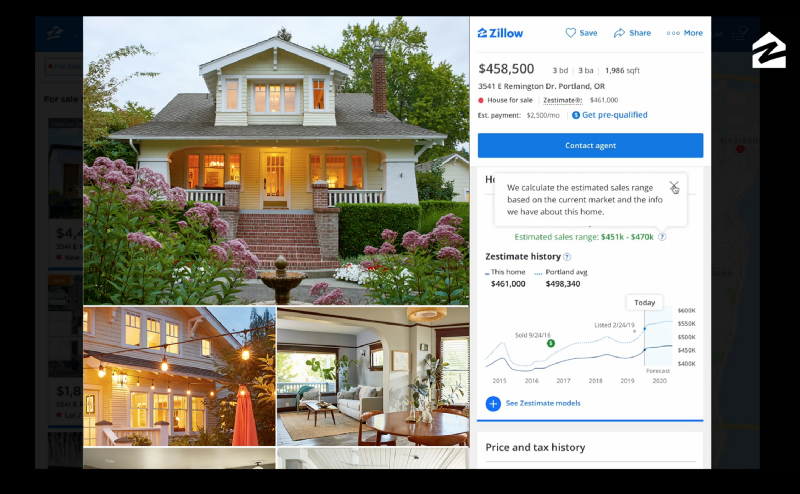
One of the most recognized tools, Zillow’s Zestimate, has become a go-to for homeowners wanting to know their property’s worth. It uses a combination of public records, MLS data, and user-submitted information to calculate values for millions of homes.
Although not an official appraisal, the Zestimate updates regularly and provides both homeowners and buyers with a reliable baseline. Many sellers monitor their Zestimate before listing, while buyers use it as a negotiation reference point.
Redfin Estimate

Redfin Estimate is known for its accuracy, especially in markets where Redfin operates directly with MLS data. It considers property features, local sales, and neighborhood factors to deliver daily updates.
For competitive housing markets, where prices shift rapidly, Redfin’s estimator is particularly valuable. Buyers and sellers alike use it to stay current on fluctuations and avoid mispricing.
Realtor.com Home Value Tool

Realtor.com’s Home Value Tool offers a unique approach by providing a range of values instead of one fixed number. This accounts for market variability and helps set realistic expectations.
For sellers, the tool prevents frustration by acknowledging that a property’s value is influenced by multiple factors. For buyers, it offers flexibility when assessing what a home might realistically sell for.
Chase Home Value Estimator

Chase, one of the largest U.S. banks, provides a home value estimator that integrates real estate with personal finance. Homeowners can quickly determine their property’s worth and evaluate refinancing or home equity loan opportunities.
By combining valuation with financial planning, Chase helps homeowners see their property not just as real estate, but as part of a broader financial strategy.
CoreLogic Automated Valuation Models (AVMs)
CoreLogic powers professional-grade valuation models used by banks, lenders, and insurance companies. Their Automated Valuation Models (AVMs) analyze dozens of variables to determine highly accurate property values.
This demonstrates how “value my house” is not just a consumer question—it’s also central to institutional risk management, lending decisions, and investment analysis.
Benefits of Using Technology to Value My House
The digital age has redefined the real estate experience, making home valuation more accessible, accurate, and insightful.
One major benefit is speed and convenience. In seconds, a homeowner can find a credible estimate without leaving their couch. This democratizes access to information once limited to industry professionals.
Another advantage is data-driven accuracy. With constant updates from MLS listings, tax records, and buyer activity, modern estimators provide real-time reflections of the market.
Technology also allows for personalization. Some platforms enable homeowners to input details about renovations or upgrades, instantly adjusting value estimates. This gives a more accurate picture than generic models.
Ultimately, these tools save time, reduce uncertainty, and empower both sellers and buyers to make informed choices with confidence.
Practical Use Cases for Home Valuation
Preparing to Sell
When planning to sell, homeowners can use valuation tools to set a competitive asking price. This prevents the risks of underpricing or sitting on the market for too long due to overpricing.
Considering Refinancing or Loans
Banks often base refinancing or equity loan decisions on a home’s market value. Having an updated estimate allows homeowners to approach lenders with confidence.
Tracking Investment Growth
For many, a home is the largest investment they will ever make. Valuation tools allow homeowners to monitor their property’s appreciation over time and align it with financial goals.
Buying a New Home
Buyers searching for homes often cross-check values from multiple platforms. This helps them determine fair offers and avoid overpaying in competitive markets.
Portfolio and Risk Management
Real estate investors use valuation models to manage their portfolios. Knowing the value of each property helps them decide when to sell, refinance, or expand holdings.
Frequently Asked Questions
1. What does “value my house” mean?
It refers to the process of determining a property’s current market worth, often through online tools or professional appraisals.
2. Are online house valuations accurate?
While they provide strong estimates, they are not perfect. Accuracy depends on data quality, location, and property details. Professional appraisals are still required for official transactions.
3. Can I improve my home’s value estimate?
Yes. Renovations, upgrades, and improved curb appeal can positively impact your home’s value. Some platforms allow you to input these changes for a more precise estimate.